Licensed Environmental Consulting, Detection & Risk Assessment

Search Results
Search this site
13 results found with an empty search
- Final Takeaway on Radon
Radon is everywhere: present in homes, schools, churches, hospitals, health clubs, daycare centers, and the "fresh air" we breathe outdoors. The difference is the concentrations. We must become more aware of invisible environmental risks, that are impacting our long-term health. Please start these important discussions with family, friends, and communities about the importance of radon testing and awareness. Every U.S. Surgeon General has recommended radon testing as a simple and effective way to reduce lung cancer risk. Test for radon. Prevent exposure. Protect health
- US Radon Zone Map
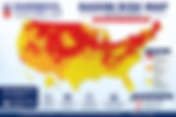
What are the radon levels where I live? Illinois is located in Zone 1. Most Illinois Counties have a predicted average indoor radon screening level greater than 4.0 pCi/L (picoCuries per liter air)
- Understanding PLM and TEM Asbestos Testing: Why It Remains Crucial in 2026
Introduction: Why Asbestos Testing Still Matters in 2026. Even in 2026, asbestos remains a serious health hazard in older buildings, industrial facilities, and certain imported materials. While asbestos use has been heavily restricted in many countries, it still exists in insulation, floor tiles, roofing, cement products, and even some automotive parts. The danger lies in asbestos fibers becoming airborne — once inhaled, they can cause mesothelioma, asbestosis, and lung cancer decades later. That’s why accurate asbestos testing is critical before any renovation, demolition, or material disturbance. Two of the most widely used laboratory methods are Polarized Light Microscopy (PLM) and Transmission Electron Microscopy (TEM). This guide will break down PLM vs TEM asbestos testing, their differences, advantages, limitations, and when to use each — so you can make an informed decision in 2026. What is PLM Asbestos Testing? Polarized Light Microscopy (PLM) is a laboratory technique that uses polarized light and optical mineralogy to identify asbestos fibers in bulk material samples. How PLM Works A small sample of the suspect material (e.g., ceiling tile, insulation, floor tile) is prepared on a microscope slide. Polarized light is passed through the sample. The mineral’s optical properties — such as refractive index, birefringence, and extinction angle — are compared to known asbestos fiber characteristics. The analyst determines the type of asbestos (chrysotile, amosite, crocidolite, tremolite, actinolite, anthophyllite) and estimates the percentage content. Advantages of PLM Cost-effective — generally less expensive than TEM. Fast turnaround — results often within 24–48 hours. Good for bulk materials — especially when asbestos content is above 1%. Widely available — most accredited asbestos labs offer PLM. Limitations of PLM Lower sensitivity — may miss very fine fibers (<0.25 microns). Not ideal for air samples — better suited for solid materials. Detection limit — struggles with asbestos content below 1%. What is TEM Asbestos Testing? Transmission Electron Microscopy (TEM) is a high-resolution imaging technique that uses electron beams instead of light to detect asbestos fibers at the nanometer scale. How TEM Works The sample (often air filters or dust wipes) is prepared in an ultra-thin section. An electron beam passes through the sample in a vacuum. The microscope produces a magnified image of the fibers, revealing their crystal structure and chemical composition. Energy-dispersive X-ray spectroscopy (EDS) can confirm the fiber’s elemental makeup. Advantages of TEM Extremely high sensitivity — detects fibers as small as 0.02 microns. Ideal for air and dust samples — perfect for clearance testing after asbestos abatement. Precise identification — distinguishes asbestos from non-asbestos fibers. Regulatory acceptance — required by some agencies for final clearance. Limitations of TEM Higher cost — more expensive than PLM. Longer turnaround — due to complex sample preparation. Specialized equipment — fewer labs offer TEM compared to PLM. PLM vs TEM: Side-by-Side Comparison Table | Feature | PLM (Polarized Light Microscopy) | TEM (Transmission Electron Microscopy) | |---------|----------------------------------|-----------------------------------------| | Detection Limit | ~1% asbestos content | <0.01% asbestos content | | Fiber Size Detection | >0.25 microns | >0.02 microns | | Best For | Bulk material analysis | Air & dust analysis | | Cost | Lower | Higher | | Turnaround Time | Faster | Slower | | Regulatory Use | Common for initial surveys | Often required
- Why Radon Testing Is Critical During Summer Months
The Hidden Seasonal Risk Most Homeowners Ignore When most people think about radon testing, they assume winter is the only time that matters. Closed windows, sealed homes, and stagnant air seem like the perfect conditions to detect this invisible gas. But that assumption is incomplete—and in many cases, dangerous. Summer radon testing is not only important—it’s essential for accurate risk assessment, real estate transactions, and year-round exposure protection. What Is Radon and Why It Matters Radon is a colorless, odorless, radioactive gas that forms naturally from the breakdown of uranium in soil. It enters homes through: Foundation cracks Sump pits Crawlspaces Utility penetrations Slab joints Once inside, radon can accumulate to dangerous levels. According to the EPA, radon is the #1 cause of lung cancer among non-smokers and the second leading cause overall. The Myth: “You Should Only Test in Winter” Winter testing is often recommended because homes are closed up, which can trap radon and show worst-case conditions. However, relying only on winter data creates a false sense of security. Here’s why: Radon levels fluctuate year-round Soil conditions change with temperature, moisture, and pressure Mechanical systems behave differently in summer vs. winter Testing only in winter = incomplete data. Why Summer Radon Testing Is So Important 1. Real Estate Transactions Peak in Summer The majority of home sales occur between May and August. If you’re buying or selling: Radon testing is often required during inspection Delays can kill deals or reduce property value Elevated results can trigger negotiations or mitigation requirements No summer testing = no deal certainty. 2.Radon Levels Can STILL Be Elevated in Summer Many assume opening windows eliminates radon risk. Not true. Summer conditions can actually increase radon entry due to: Lower indoor pressure from air conditioning systems Stack effect reversal in certain structures Soil drying and cracking, allowing more gas intrusion Heavy rains, pushing radon into structures Radon doesn’t take the summer off—and neither should testing. 3. HVAC Systems Change Airflow Dynamics Air conditioning systems: Create negative pressure zones Pull soil gases into the home Circulate contaminated air throughout living spaces This means radon exposure can remain consistent—or even elevated—despite ventilation. 4. Baseline Data for Year-Round Exposure Professional radon programs emphasize multiple tests across seasons. Why? Because: A single test is a snapshot Multiple tests create a true exposure profile Summer testing helps: Validate winter results Identify seasonal spikes Support mitigation decisions 5. Schools, Daycares, and Commercial Buildings Operate Differently in Summer Many facilities: Shift occupancy schedules Modify HVAC operation Reduce ventilation in unused spaces These changes can increase radon concentration in occupied areas, especially: Basements Lower-level classrooms Mechanical rooms The Cost of Not Testing in Summer Skipping summer testing can lead to: Undetected elevated radon levels Failed real estate transactions Increased long-term health risk Non-compliance with EPA, state, or institutional guidelines When Should You Test? The answer is simple: Test in every season - or at minimum, test when it matters most. Professional Testing vs. DIY Kits While DIY kits exist, they often lack: Proper placement controls Environmental condition monitoring Chain-of-custody validation Real-time accuracy Professional testing ensures: EPA-compliant protocols Legally defensible results Accurate, decision-grade data Ideal Testing Strategy: Summer: Real estate + baseline comparison Winter: Worst-case confirmation Post-mitigation: Verification testing Final Takeaway Radon is not a seasonal problem—it’s a year-round threat. And summer is one of the most critical times to test. Whether you’re: Buying or selling a home Managing a school or commercial building Protecting your family’s health Summer radon testing provides essential data you cannot afford to miss. Take Action Now Don’t wait for winter to discover a problem that already exists. Schedule a professional radon test today and gain confidence in your indoor air quality—no matter the season. Radon is invisible—but its impact is not. Awareness leads to action. Action saves lives. Test for radon. Prevent exposure. Protect health.
- How Do I Know If My Home Has High Radon?
If you’re asking this question, you’re already ahead of most homeowners. As an Illinois licensed radon measurement professional (RNM2015202), I’ve been performing radon testing since 2015 in residential, commercial, daycare, and multi-family buildings. Over the years, one thing has become clear: you cannot identify elevated radon levels just by looking at a home. You have to test.
- What I see in the field
In Illinois, especially across many western suburban areas, I’ve repeatedly seen consistently elevated radon levels across neighborhoods with similar architectural styles. These homes often sit on similar soil profiles, and that matters more than age, design, or occupancy habits. Radon is a byproduct of uranium naturally present in soil and rock. Because of that, all homes have some level of radon—the IMPORTANT QUESTION, how much radon is in your home?
- What homeowners should do about radon?
If there is one recommendation I give consistently, it is this: Test every home, regardless of age, location, or construction type. Testing should be treated as a standard part of home awareness, not a reaction to suspicion.
- What are common DIY radon testing mistakes?
Common mistakes homeowners make The most frequent mistakes I see include: Assuming a home inspection automatically includes radon testing Relying on a neighbor’s test result Believing location or home age guarantees safety Incorrect placement of DIY tests Not retesting after changes to ventilation or mitigation systems Even small misunderstandings can lead to a false sense of security.
- What actually influences radon levels?
After years of field testing, one of the strongest predictors is not home age or style, but foundation and soil interaction. Homes built over: uranium-rich soils gravel or dirt crawl spaces multiple foundation transitions unsealed sump pits or soil gas entry points often show greater potential for elevated readings. One detail I frequently inspect is the sump pit cover. A missing or improperly sealed cover can be a significant entry point for soil gas, including radon. The only reliable way to know There is no visual inspection, symptom check, or neighbor comparison that can confirm radon levels in your home. The only way to know is to test. In my experience, DIY kits are often placed incorrectly, especially when positioned too close to the floor or outside the proper “breathing zone” (typically 4–6 feet above the floor). This can lead to misleading results. Proper testing conditions and professional placement matter when interpreting exposure risk accurately
- Why symptoms are not a warning system
Some people assume they would “feel” radon exposure. They may associate long-term exposure with respiratory symptoms such as coughing, wheezing, or shortness of breath. The reality is that radon is dangerous precisely because it has no immediate warning signs. By the time health effects appear, exposure has already occurred over a long period of time. This is why relying on symptoms is not a reliable method of detection. A real-world case example We’ve tested homes as new as 25 years old with deep poured-concrete basements, crawl spaces, and multiple foundation types over uranium-rich soil. In one case, testing was requested after a non-smoking occupant was diagnosed with stage 3 lung cancer. The occupant had lived in the home for only five years. The radon level measured 5.0 pCi/L, above the EPA and Illinois Emergency Management Agency action level of 4.0 pCi/L. Situations like this highlight why radon testing is not just a construction concern—it’s a health decision. What actually influences radon levels After years of field testing, one of the strongest predictors is not home age or style, but foundation and soil interaction. Homes built over: uranium-rich soils gravel or dirt crawl spaces multiple foundation transitions unsealed sump pits or soil gas entry points often show greater potential for elevated readings. One detail I frequently inspect is the sump pit cover. A missing or improperly sealed cover can be a significant entry point for soil gas, including radon. The only reliable way to know There is no visual inspection, symptom check, or neighbor comparison that can confirm radon levels in your home.
- An Inspector's view
In Illinois, especially across many western suburban areas, I’ve repeatedly seen consistently elevated radon levels across neighborhoods with similar architectural styles. These homes often sit on similar soil profiles, and that matters more than age, design, or occupancy habits. Radon is a byproduct of uranium naturally present in soil and rock. Because of that, all homes have some level of radon—the real question is how much enters the structure.
- The biggest misconception about radon.
One of the most common misunderstandings I hear is that radon “doesn’t apply” to certain homes or locations. Homeowners often believe: New construction homes are safe City homes (including Chicago and surrounding suburbs) don’t have radon Slab-on-grade homes are exempt A basement that isn’t used doesn’t matter Health or fitness can offset exposure risk If a neighbor has low radon, nearby homes must be low too After thousands of tests, I can say confidently: none of these assumptions reliably predict radon levels.